|
|
|
|
|
American Cedar Plank Board Single 7 Siding |
|
|
|
|
|
|
|
|
|
|
|
|
|
|
Part Details | Image | Price | Qty |
|
Insulated Single 7, 12'-3" Length, Stained American Cedar 1 sq/ctn
Part Number:23S793 |
|
USD
349.99 |
|
|
Insulated Single 7, 12'-3" Length, Stained American Cedar, Each
Part Number:23S793-1 |
|
USD
24.99 |
|
|
4" Outside Corner with 1 1/8" Receiver w/FOAM, 12' Length, Stained American Cedar, Each
Part Number:39AD118F41293-1 |
|
USD
48.99 |
|
|
4" Outside Corner with 3/4" Receiver w/Foam, 12' Length, Stained American Cedar, 6 pc/ctn
Part Number:39ADF41293 |
|
USD
274.99 |
|
|
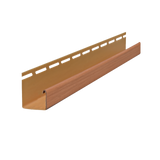
1/2" J-Channel with 1" Face, 12'-6" Length, Stained American Cedar, 40pc/ctn
Part Number:39AC35593 |
|
USD
399.99 |
|
|
Inside Corner Post with 3/4" Receiver, 10' length, Stained American Cedar, 10pcs/ctn
Part Number:39AC32593 |
|
USD
119.99 |
|
|
Inside Corner Post with 3/4" Receiver, 10' length, Stained American Cedar, Each
Part Number:39AC32593-1 |
|
USD
11.99 |
|
|
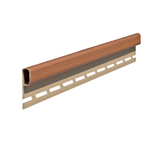
3/4" face Finish Trim, 12'-6" Length, Stained American Cedar, 40 pc/ctn
Part Number:39AC32293 |
|
USD
269.99 |
|
|
3/4" face Finish Trim, 12'-6" Length, Stained American Cedar, Each
Part Number:39AC32293-1 |
|
USD
6.99 |
|
|
3.5" Window Lineal with 3/4" Receiver w/Foam, 12'-6" Length, Stained American Cedar, 20psc/ctn
Part Number:39WL3593 |
|
USD
519.99 |
|
|
3.5" Window Lineal with 3/4" Receiver w/Foam, 12'-6" Length, Stained American Cedar, Each
Part Number:39WL3593-1 |
|
USD
25.99 |
|
|
Starter Strip For Single 7 Panel, 24pc/ctn
Part Number:21ESS |
|
USD
167.99 |
|
|
4" Outside Corner with 3/4" Receiver w/Foam, 12' Length, Stained American Cedar, 6 pc/ctn
Part Number:39ADF41293-IS7 |
|
USD
274.99 |
|
|
4" Outside Corner with 3/4" Receiver w/Foam, 12' Length, Stained American Cedar, Each
Part Number:39ADF41293-1-IS7 |
|
USD
45.99 |
|
|
3/4 " J Channel w/ 1" Face, Stained American Cedar, 40 pcs/ctn
Part Number:39AC56693 |
N/A |
USD
399.99 |
|
|
3/4" J Channel w/ 1" Face, Stained American Cedar, 12'-6" length, Each
Part Number:39AC56693-1 |
|
USD
9.99 |
|
|
1/2 " J Channel w/ 1" Face, Stained American Cedar, 12'-6" length, Each
Part Number:39AC35593-1 |
N/A |
USD
9.99 |
|
|
1 1/8" J-Channel with 1" Face, 12'-6" Length, Stained American Cedar, Each
Part Number:39AC36693-1 |
N/A |
USD
17.99 |
|
|
|
Timbermill® Simulated Cedar Plank Board Single 7 Siding offers everything you love about natural cedar…
Except the sanding, staining, splintering, warping, weathering and worry. It’s the high performance, low-maintenance, affordable alternative to wood. Perfect when used as a primary siding, or as an accent to stone, brick or other cladding. Timbermill® is available in four profiles, to replicate four popular cedar siding patterns and two stunning, no-fade colors. Recreate your favorite natural cedar look and never have to undertake the maintenance that actual wood siding demands.
Perfect when used as a primary siding, or as an accent to stone, brick or other cladding. Timbermill® Plank Board Single 7 Siding has all the accessories available to complete your project such as J-Channel, Corners, Window Lineal and Finish Trim.
- Knots and grain patterns give a realistic wood appearance
- Panels available in a variety of patterns to achieve an authentically random look
- Blends well with traditional siding materials when used as an accent
- Single 7 features a foam core, adding increased impact resistance and sound deadening
- Sold here in American Cedar
Timbermill® Siding is a specialty vinyl siding manufactured using CP Class Siding which is a Polymer that combines temperature resistance above 190 degrees Fahrenheit along with a UV fading protection system.
Information on our Siding & Accessories:
1 Square = 100 square foot of coverage or 10 foot by 10 foot area
Inside Corner post with 1-3/8” Face with ¾” Receiver come in 10’-0 Lengths
4” Outside Corner Post are 4” Face with ¾” Receiver w pre- Installed Foam Insert come in 12’-0” Lengths
4” Outside Corner Post are 4” Face with 1- 1/8” Receiver w pre- Installed Foam Insert come in 12’-0” Lengths
1” Face ¾” J-Channel comes in 12’-6” Lengths
1” Face1-1/8” J-Channel comes in 12’-6” Lengths
1” Face 1/2” J-Channel comes in 12’-6” Lengths
¾” Face Finish Trim comes in 12’-6” Lengths
Window/Door Trim with 3-1/2” Face with 1-1/8” Receiver with foam Insert comes in 12’-6” lengths
Window/Door Trim with 3-1/2” Face with 3/4” Receiver with foam Insert comes in 12’-6” lengths
Starter Strip part number 21ESS comes in 12’-5” lengths
All other starter strip comes in 10’ lengths
|
|
|
Proper installation is critical.
These instructions describe and illustrate the steps involved in installing Timbermill Siding, trim, and accessories. Their purpose is to provide detailed information and how-to tips that will simplify your installation process. Timbermill shall not accept any liability or responsibility under its written warranty for failure caused by application that does not meet the requirements for proper installation.
Product specific installation guidelines are provided below where applicable for specialty products.
http://www.vinylsiding.org/INSTALLATION/
|
|
|
Cleaning
How do I wash Timbermill siding?
Wash Timbermill siding with a soft cloth or ordinary long-handled, soft bristle brush. For textured surfaces, use only a soft bristle brush to keep the grooves in the texture stain-free. For best results, start at the bottom of the house and work up and rinse the cleaning solution completely before it dries. If your house has brick facing, cover the brick so that it is not affected by the runoff.
Can I use a power washer?
Yes, though you should read the washer instructions carefully before use. When cleaning, hold the power washer straight at eye level to keep the water on top of the siding where it can clean most effectively. Do not aim the power washer upward as water may be driven behind the siding.
You should also follow the siding manufacturer’s recommendations. Some manufacturers don't want pressure washers used on their products at all. Others allow them, but have limitations on the amount of pressure and the cleaners that can be used. Most will caution against the use of pressure washers around any opening in the wall, such as windows, doors, electrical wiring, and plumbing.
How do I remove mold and mildew?
Small spots of mold and mildew can be handled with cleaners such as Fantastik® or Windex®. For larger sections, a solution of vinegar (30%) and water (70%) has proven successful. Alternatively, you also could try the following solution: 1/3 cup (2 2/3 ounces) powdered laundry detergent (e.g., Tide®, Fab®, or equivalent), 2/3 cup (5 1/3 ounces) powdered household cleaner (e.g., Spic & Span®, Soilax®, or equivalent), 1 quart (32 fluid ounces) liquid laundry bleach, and 1 gallon (128 fluid ounces) of water.
What types of cleaners should I use for other stains?
A list of commonly accepted cleaners is provided in the box below. Be sure to spot check any general or stain specific cleaner before using it on a large section of siding. After removing the stain, rinse thoroughly with water. Do not use cleaners containing organic solvents, undiluted chlorine bleach, liquid grease remover, nail polish remover, or furniture polish or cleaners. They can affect the surface of the siding.
Maintenance
How can I protect Timbermill siding from discoloration?
Cover Timbermill siding when using stains, sealants, and wet concrete as part of other home renovation projects. Certain insecticides or herbicides can potentially stain Timbermill siding. Consult the product labels and/or the insecticide or herbicide manufacturer before applying.
How does heat affect Timbermill siding?
Timbermill siding is made from organic materials and can melt when exposed to a significant heat source. Timbermill is a combustible material, but will not readily ignite unless exposed to flames from an existing fire. Home and building owners with all types of siding should always take precautions to keep heat sources such as barbeque grills, and readily ignitable materials such as dry leaves, mulch, and trash away from the structure.
How does heat from reflected light affect Timbermill siding?
Abnormally concentrated sunlight reflected onto Wildside siding by windows can result in surface temperatures far exceeding those caused by direct exposure to the sun. Temperatures necessary to cause significant distortion of Timbermill siding are not routinely achieved, even when siding is exposed to both direct sunlight and the reflection from normal, flat window glass. However, under some conditions the glass in energy efficient windows can become concave, forming a mirror that concentrates sunlight in a small area. Temperatures in this area can be greater than many building materials, including Wildside siding, are designed to withstand.
The best way to avoid or reduce this problem depends on the specific circumstances. However, anything that blocks the path of sunlight, either to the window or between the window and the siding, will eliminate or reduce the problem. This includes the strategic placement of trees, bushes or other landscaping elements and the use of sunshades above windows. Screening applied to windows may reduce the total amount of reflected energy sufficiently to avoid the problem.
Can I paint Timbermill siding?
Consult with your Timbermill siding manufacturer before painting Timbermill siding. Many manufacturers void their warranties if the siding is painted.
What kind of Timbermill siding should I use if I'm planning to reside my home?
There are many different shapes, colors, and textures of Timbermill siding. While VSI does not recommend any one type or brand, it does sponsor the VSI Product Certification Program that helps ensure the quality of Timbermill siding through a third-party inspection process. Timbermill siding certified through VSI's Program carries a special logo on its packaging that means it has been independently verified to meet or exceed the industry standard for quality. For more information about which brands of Wildside siding are certified, click here for our searchable database of certified products
|
|
|
|
|
|